 Apr, 12 2026
Quick Takeaways: Should You Take It?
- Life-critical drugs: Never use them past the expiration date (e.g., Insulin, EpiPens).
- Solid pills: Many (like Ibuprofen) stay potent longer, but effectiveness drops over time.
- Liquids & Eye Drops: Toss them immediately; they degrade fast and can grow bacteria.
- Antibiotics: Using expired ones can lead to treatment failure and antibiotic resistance.
- Emergencies: In a life-or-death crisis, an expired emergency drug is better than nothing, but head to the ER immediately.
The Science of Why Drugs "Expire"
Medications don't usually turn into poison the moment the clock strikes midnight on the expiration date. Instead, they undergo chemical degradation. This is where Stability Testing comes in. Manufacturers put drugs through stress tests-varying temperature and humidity-to see when the active ingredient starts to break down.
The risk depends heavily on the form of the drug. Tablets and capsules are generally the toughest. For example, some studies show that Ibuprofen can retain about 90% of its strength up to five years after the date on the bottle. However, liquid medications are a different story. They are far more prone to molecular breakdown and contamination. Eye drops, for instance, can show a 60% bacterial contamination rate within just 30 days past their expiration date, which can lead to serious eye infections.
High-Risk Medications You Should Never Gamble With
There is a massive difference between a pill for a mild headache and a drug that keeps you alive. For life-critical medications, even a 10% drop in potency can be a disaster. You should replace the following immediately upon expiration:
- Insulin: This is highly unstable. It can lose 10% of its power every month after opening, even if kept in the fridge.
- Epinephrine (EpiPens): These can lose 20-30% of their strength within six months of expiring. In a severe allergic reaction, that loss of power can be the difference between a quick recovery and a trip to the ICU.
- Nitroglycerin: These tablets are incredibly volatile and can lose 50% of their effectiveness within three months of opening the bottle, regardless of the expiration date.
- Blood thinners and seizure medications: These require precise dosing. A slight dip in strength could lead to a stroke or a seizure.
| Drug Type | Typical Stability | Primary Risk After Expiration |
|---|---|---|
| Solid Tablets (e.g., Acetaminophen) | High | Gradual loss of potency |
| Liquid Formulations | Low | Chemical breakdown & bacterial growth |
| Biologics (e.g., Insulin) | Very Low | Rapid loss of structural integrity |
| Antibiotics (e.g., Amoxicillin) | Moderate | Sub-potency leading to antibiotic resistance |
The Hidden Danger of Expired Antibiotics
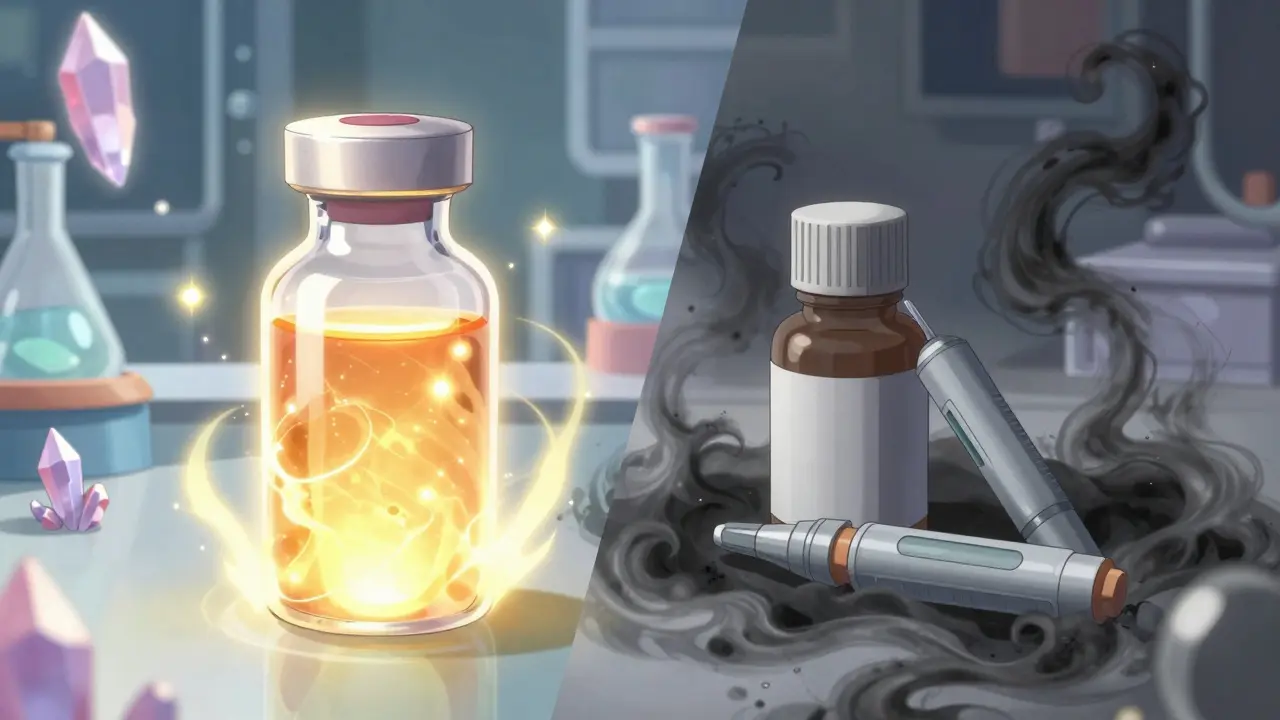
Using an old bottle of antibiotics is more than just a risk of the medicine "not working." When you use a sub-potent antibiotic, you aren't killing all the bacteria causing your infection. This creates a breeding ground for Antibiotic Resistance. The surviving bacteria learn how to fight the drug, which can lead to much harder-to-treat infections, like ESBL-producing E. coli.
In some rare and dangerous cases, expiration can actually create toxins. Tetracycline is a notorious example. When this antibiotic expires, it can degrade into compounds that cause Fanconi syndrome, which is a type of acute kidney failure. If you see old tetracycline in your cabinet, get rid of it immediately.
How Storage Changes the Game
Where you keep your meds matters as much as the date on the label. Many people store their medicine in the bathroom, but the constant humidity and temperature swings from the shower can make drugs degrade up to 40% faster. Heat is another enemy; if your medicine cabinet is exposed to temperatures above 86°F, the molecular breakdown accelerates.
To make your medications last as long as possible, stick to these rules:
- Keep them in a cool, dry place (ideally below 77°F).
- Leave them in their original amber glass or plastic containers to protect them from light.
- Keep childproof caps tightened to prevent moisture from leaking in.
- Perform a quarterly "cabinet clear-out" to spot expiring drugs early.
How to Properly Dispose of Old Meds
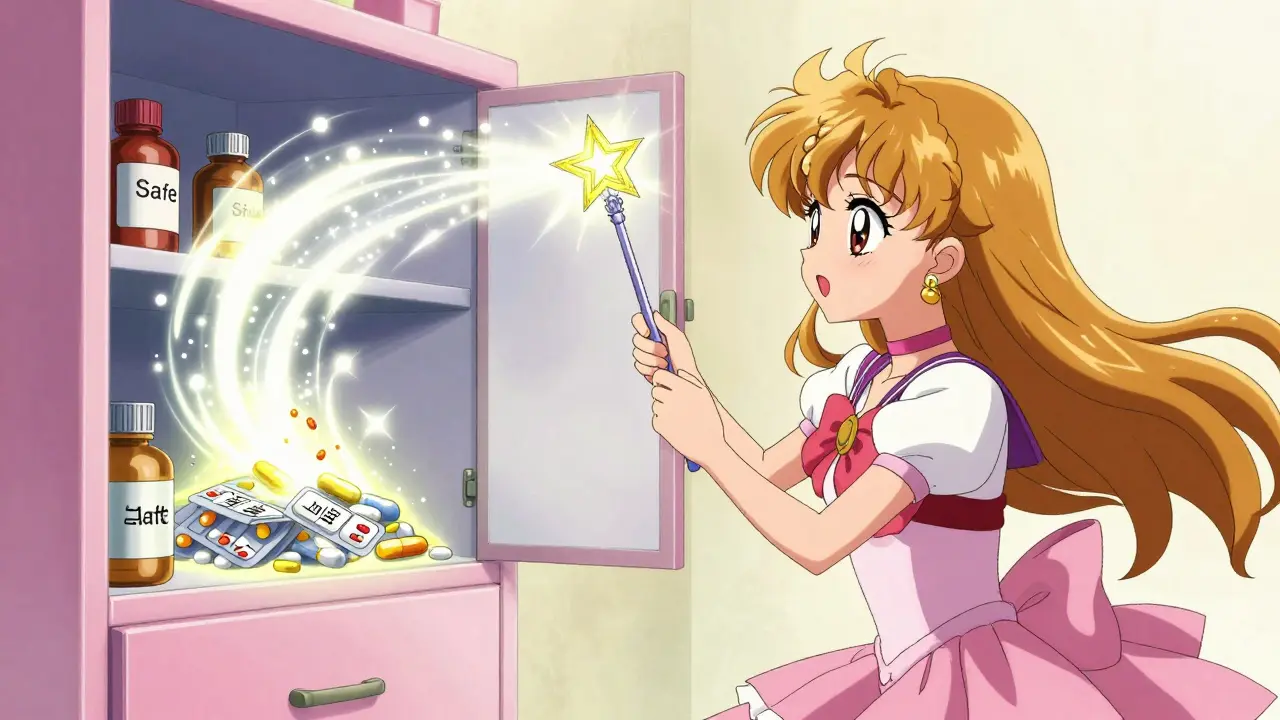
You can't just throw every pill in the trash or flush them down the toilet. Flushing can contaminate the water supply, and throwing loose pills in the bin invites pets or children to find them. The gold standard is using a registered drug take-back location. The DEA runs national initiatives to make this easier, though not everyone lives near a collection site.
If you can't get to a take-back site, follow the FDA's home disposal protocol:
- Remove the medicine from its original bottle.
- Mix the pills or liquid with something unappealing, like used coffee grounds or cat litter (use a 2:1 ratio).
- Put the mixture in a sealed plastic bag or container.
- Throw the container in the household trash on pickup day.
- Scratch out your personal information on the empty prescription bottle before recycling it.
One major exception: Only flush medications that are on the official FDA Flush List. These are typically high-potency opioids like fentanyl or oxycodone, where the risk of an accidental fatal overdose in the trash outweighs the environmental harm of flushing.
Will I get poisoned if I take an expired pill?
For most medications, the main risk isn't poisoning, but rather that the drug won't work. However, a few specific drugs, like tetracycline, can become toxic as they break down. Always check the drug type before deciding.
Is it okay to use expired aspirin for a headache?
Generally, for minor aches and pains, using an over-the-counter medicine that expired a few months ago is considered low risk. But if you take a daily aspirin specifically for heart health, you should replace it immediately because you need the exact potency to prevent a cardiac event.
Can I tell if a liquid medication has expired just by looking at it?
Sometimes. Look for cloudiness, discoloration, or particles floating in the liquid (common in expired insulin). However, many chemical changes and bacterial growths are invisible, so a "clear" look doesn't guarantee it's safe.
What should I do if I only have an expired EpiPen during an allergic reaction?
In a life-threatening emergency, medical experts suggest that using an expired emergency drug is better than using nothing at all. Administer the medication, but immediately call 911 or go to the emergency room, as the drug may be too weak to fully stop the reaction.
Why doesn't the FDA just give a longer expiration date?
The FDA requires manufacturers to guarantee the drug's full potency and safety. While some drugs remain stable for decades (as seen in military studies), manufacturers cannot legally guarantee performance for every single user's varying storage conditions, so they stick to conservative, tested dates.
Next Steps for Your Medicine Cabinet
If you're staring at a pile of old prescriptions, start by sorting them into two piles: "Critical" and "General." Anything in the critical pile (insulin, inhalers, heart meds) that is past its date should be bagged for disposal today. For the general pile, check for any liquid medications or antibiotics-those should also go. For a few old Tylenol or Advil tablets, you're likely safe, but if they've been sitting in a humid bathroom for years, it's time to spend a few dollars on a fresh bottle for peace of mind.
David Snyder
April 12, 2026 AT 18:46This is actually really helpful for anyone trying to organize their home pharmacy!
Mary Johnson
April 14, 2026 AT 11:51Of course they want you to throw them away and buy new ones! It's just another way for big pharma to milk us for every cent while they push these arbitrary dates to keep the profits soaring, and honestly, the FDA is probably just in their pocket anyway 🙄
Scott Lofquist
April 15, 2026 AT 23:49Actually, if you've read the actual stability studies, you'd know the shelf-life extension program proves most solids are fine for a decade 🙄. People just love following rules blindly because they're too lazy to do their own research! 💅✨
Tabatha Pugh
April 17, 2026 AT 09:12I've seen people keep meds in their cars for months in the summer heat and then wonder why they don't work. It's basic chemistry that most people just ignore because they think the plastic bottle is a magic shield.
Milo Tolley
April 18, 2026 AT 22:23The pharmacokinetic degradation mentioned here is absolutely catastrophic!!! We are dealing with systemic instability in the molecular lattice of these compounds!!!
Olivia Lo
April 19, 2026 AT 16:07It is interesting to consider the ontological shift in how we perceive the "utility" of a substance once it crosses a temporal boundary. While the chemical stoichiometry might remain largely intact, the psychological certainty provided by the regulatory framework is what truly erodes, creating a tension between empirical efficacy and systemic compliance.
Princess Busaco
April 19, 2026 AT 20:26Oh please, as if anyone actually follows these disposal guidelines in the real world, because let's be honest, the effort required to mix pills with cat litter is just far too much for the average person who is probably already neglecting their health in ten other ways, and the sheer audacity of suggesting that we all just have a "registered take-back location" nearby is just laughably out of touch with the reality of rural living where the nearest pharmacy is a forty-minute drive through a cornfield!
Shaylia Helland
April 20, 2026 AT 16:34i just think it's kind of wild how we all just store stuff in the bathroom without thinking about the steam but it makes sense i guess and honestly i've probably got some old stuff in my cabinet right now that i need to go look at later today
Billy Wood
April 22, 2026 AT 03:47TIME TO CLEAN OUT THOSE CABINETS!!! LET'S GET IT DONE!!!
Rim Linda
April 22, 2026 AT 06:45OMG I just checked my cabinet and everything is expired!!! I'm literally panicking right now 😱😭