 Mar, 21 2026
What Is Bell’s Palsy?
Bell’s palsy is a sudden, unexplained weakness or paralysis on one side of the face. It happens when the facial nerve - the seventh cranial nerve - becomes inflamed, swollen, or compressed inside the narrow bony tunnel it travels through. This nerve controls all the muscles you use to smile, blink, raise your eyebrows, and even close your eye. When it’s damaged, those movements stop working. You might notice your mouth drooping, saliva leaking out the corner of your lip, or difficulty closing your eye. It usually hits fast - sometimes overnight. People often wake up with it, thinking they’ve had a stroke. But unlike stroke, Bell’s palsy doesn’t affect your arms, legs, or speech. It’s isolated to the face.
It’s not rare. About 15 to 30 out of every 100,000 people get it each year. Most cases happen between ages 15 and 45. You’re more likely to get it if you’re pregnant, have diabetes, or have a recent viral infection like a cold or flu. The exact cause isn’t known, but experts think it’s tied to inflammation from a dormant virus, like herpes simplex, reactivating and swelling the nerve. But even if a virus is involved, treating it with antivirals alone doesn’t help. Only one treatment has proven, reliable results: corticosteroids.
Why Corticosteroids Are the Gold Standard
For decades, doctors tried everything - acupuncture, electrical stimulation, hyperbaric oxygen, laser therapy. None worked consistently. Then came the large, high-quality studies. The Cochrane Database of Systematic Reviews analyzed data from nearly 900 patients across seven randomized trials. What did they find? Corticosteroids cut the chance of incomplete recovery by 31%. That’s not small. It’s the difference between losing half your smile permanently or getting it back fully.
The reason it works is simple: inflammation. The facial nerve is trapped inside a tight bone canal. When it swells, it gets crushed. Corticosteroids like prednisone don’t fix the virus. They shrink the swelling. Less pressure means the nerve can heal faster. Studies show patients who take corticosteroids recover 89.5% of their facial movement within nine months. Without them, that number drops to about 70%.
The American Academy of Family Physicians (AAFP) gives corticosteroids the highest possible evidence rating - an “A.” That means they’re confident enough to say: corticosteroids should be the first thing you get when you walk into a clinic with sudden facial weakness. No delays. No second opinions. Just treatment.
The Right Dose and Timing Matter
Taking corticosteroids isn’t about popping a pill and hoping. There’s a precise protocol. The standard is 50 to 60 milligrams of prednisone daily for five days, then slowly tapering down over the next five days. That’s a total of 500 milligrams. Why not just take a higher dose? Because research shows doses under 450 milligrams don’t work as well. Patients who got less than 450 mg had a 30% chance of incomplete recovery. Those who got 450 mg or more? Only 14%.
But timing is even more critical than the dose. You have a 48-hour window. Start treatment within two days of symptoms, and your odds of full recovery jump dramatically. After 72 hours, the benefit drops off. A 2023 study of 493 patients found that those who started prednisone within 24 hours recovered 30% faster than those who waited five days. One patient wrote on a support forum: “I waited too long last time. This time, I called my doctor the moment I woke up with a droopy face. I could see the difference by day three.”
Many people delay because they don’t recognize Bell’s palsy. They think it’s a toothache, stress, or a sleeping position. That’s why public awareness matters. If your face suddenly feels stiff, uneven, or numb - don’t wait. See a doctor immediately.
What About Antivirals? Do They Help?
You’ve probably heard about using antivirals like acyclovir or valacyclovir for Bell’s palsy. That’s because people assume a virus is the cause. But here’s the truth: antivirals alone don’t improve recovery. The AAFP review found no high-quality evidence supporting antiviral monotherapy. If you take only an antiviral, you’re no better off than someone who does nothing.
Combining antivirals with corticosteroids? That’s where things get interesting. The evidence is mixed. Some studies show it might reduce long-term complications like synkinesis - when your face twitches or moves oddly because nerves reconnect wrong. One review found a 33% lower risk of synkinesis with combination therapy. But it doesn’t improve overall recovery rates. The AAFP gives this combo a “B” rating - meaning it’s worth considering, especially if your symptoms are severe. But corticosteroids alone are still the foundation.
One exception: Ramsay Hunt syndrome. That’s when the virus is varicella-zoster (the same one that causes shingles), and you get blisters in your ear. In that case, antivirals are essential. But that’s not Bell’s palsy. Doctors have to rule it out.
Side Effects? What You Need to Know
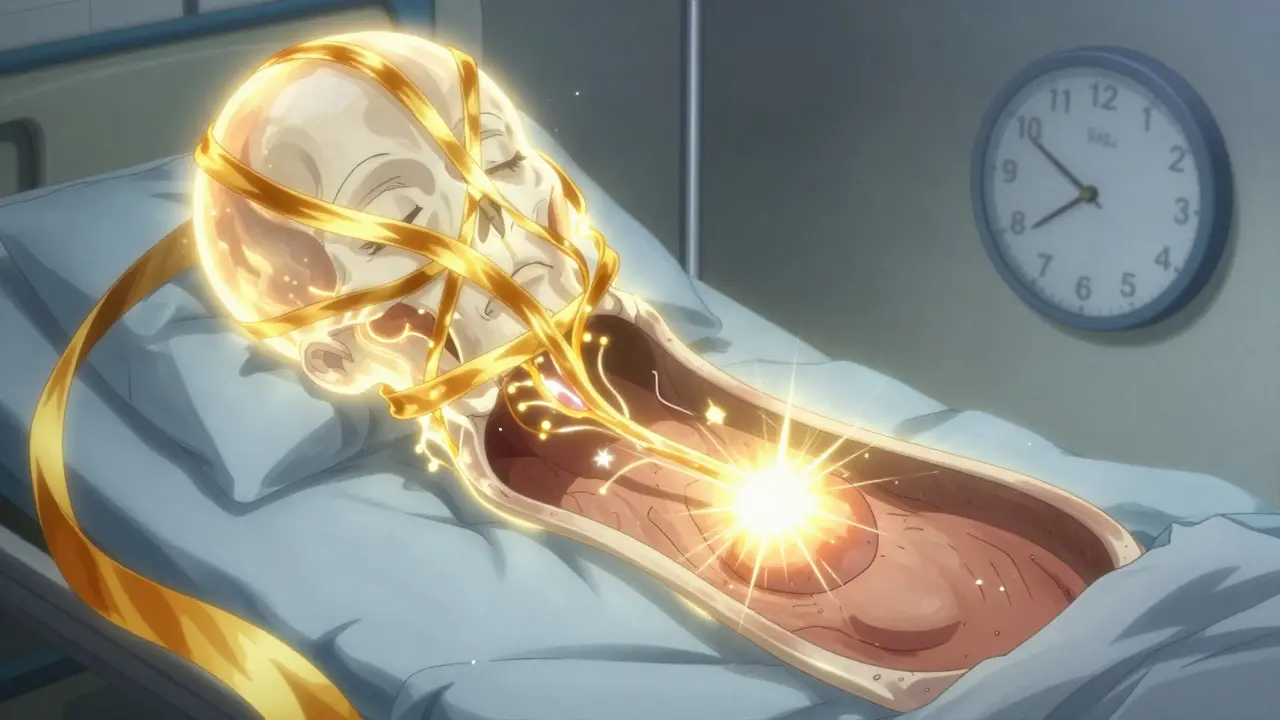
People are scared of steroids. They think of weight gain, mood swings, diabetes flare-ups - all true for long-term use. But Bell’s palsy treatment lasts 10 days. That’s not long enough for serious side effects.
A Cochrane review looked at 715 patients on corticosteroids. The side effect rate was almost identical to the placebo group. The most common complaints? Trouble sleeping, increased appetite, and mild mood changes. A few patients with diabetes had higher blood sugar during treatment. That’s why doctors ask about diabetes before prescribing. If you have it, monitor your glucose daily. It usually goes back to normal after the course ends.
No one in any major study had serious reactions like infections, bone loss, or stomach ulcers. Those happen with months of steroid use - not 10 days. The risk-benefit ratio is overwhelmingly in favor of treatment. The downside? A few nights of restlessness. The upside? Getting your smile back.
What Happens If You Don’t Treat It?
Many people assume Bell’s palsy will heal on its own. And yes - about 70% of untreated patients do recover fully. But 30% don’t. That’s 3 out of every 10 people left with permanent weakness, drooping, or abnormal muscle movements. That’s not just cosmetic. It affects eating, speaking, eye health (if you can’t blink), and self-confidence. One study found patients with incomplete recovery reported depression and social withdrawal at twice the rate of those who fully recovered.
Corticosteroids don’t just speed up recovery. They change the outcome. The number needed to treat (NNT) is 10. That means for every 10 people treated, one person avoids incomplete recovery. That’s a powerful statistic. It’s why every major medical group - from the American Academy of Neurology to the American Academy of Otolaryngology - recommends corticosteroids as first-line treatment.
What Else Should You Do?
Medication isn’t the whole story. Protect your eye. If you can’t close it, use artificial tears during the day and tape your eyelid shut at night. You don’t want your cornea to dry out. Physical therapy can help later - but not right away. Don’t massage or electrically stimulate the face in the first week. Let the nerve rest. Avoid extreme cold. Don’t assume you’re fine after a week. Recovery takes weeks to months. Keep track of progress. Use the House-Brackmann scale if your doctor gives it to you. It measures movement from Grade I (normal) to Grade VI (total paralysis). Most patients go from Grade IV or V at onset to Grade I or II within three months.

When to See a Doctor - and When to Worry
Not all facial weakness is Bell’s palsy. Stroke, brain tumors, Lyme disease, and trauma can cause similar symptoms. That’s why diagnosis matters. If you have:
- Weakness on both sides of the face
- Severe headache or dizziness
- Loss of consciousness
- Weakness in your arms or legs
- Blurred vision or trouble speaking
- then go to the ER. Those aren’t Bell’s palsy signs. They’re stroke signs. But if it’s just one side of your face, no other symptoms, and it came on fast - it’s likely Bell’s palsy. Get treatment fast. Don’t wait for a specialist. Your primary care doctor can start prednisone today.
Future of Treatment
Research is moving toward personalization. A 2023 machine learning study analyzed 493 patients and found two things predicted recovery best: age and whether you took corticosteroids. Younger patients recover faster. Older patients need treatment more. Future tools might use AI to estimate your personal recovery odds based on age, severity, and timing. But for now, the best tool is still prednisone - cheap, effective, and proven.
Final Takeaway
Bell’s palsy is scary, but it’s treatable. You don’t need expensive tests or experimental therapies. You need one thing: corticosteroids, started within 48 hours. The evidence is clear. The protocol is simple. The outcome is life-changing. If you or someone you know wakes up with a drooping face - don’t panic. Don’t wait. Call your doctor. Start the treatment. Your face will thank you.
Can Bell’s palsy come back?
Yes, but it’s rare. About 10% of people who recover from Bell’s palsy experience a second episode. It usually happens years later, and often on the opposite side of the face. If you’ve had it before, be extra alert to early signs. Early treatment is even more important the second time around.
Is Bell’s palsy contagious?
No. You can’t catch it from someone else. It’s not caused by an infection you can spread. However, some viruses (like herpes simplex) may trigger it in people who already carry the virus. That doesn’t mean you can give Bell’s palsy to someone else.
How long does it take to recover from Bell’s palsy?
Most people start improving within two weeks. Full recovery usually takes 3 to 6 months. With corticosteroids, 89.5% of patients recover completely within nine months. Without treatment, recovery can take longer - and some may never fully regain movement.
Can children get Bell’s palsy?
Yes. While it’s most common in adults aged 15 to 45, children can get it too. Treatment with corticosteroids is generally safe for children over age 12, but dosing is adjusted by weight. Evidence is still limited for younger kids, so doctors are more cautious. Always consult a pediatrician.
Do I need an MRI or CT scan?
Not usually. Bell’s palsy is diagnosed by symptoms and physical exam. But if your symptoms are unusual - like slow onset, pain in the ear, or weakness in other parts of your body - your doctor may order imaging to rule out tumors, stroke, or Lyme disease. Most people don’t need scans.
Korn Deno
March 23, 2026 AT 06:3010 days of steroids beats a lifetime of half a face.
Jefferson Moratin
March 24, 2026 AT 10:41Medicine has a clear, evidence-backed protocol. The failure isn't biological. It's systemic. We need public health campaigns, not just blog posts.
rebecca klady
March 26, 2026 AT 01:17I wish someone had told her about the 48-hour window. She cries about it every year on the anniversary.
Alex Arcilla
March 27, 2026 AT 08:50And we're still debating this?
Meanwhile, people are spending $2000 on 'facial yoga' and 'energy healing.'
Y'all are gonna need a better story than 'trust the science' when someone's kid wakes up with a crooked grin.
Brandon Shatley
March 27, 2026 AT 23:49Don't let fear stop you. The side effects are nothing compared to never smiling at your kids again.
Blessing Ogboso
March 28, 2026 AT 12:02This isn't just about science. It's about equity. The same evidence that says 'start within 48 hours' should also say 'make steroids available everywhere.'
Why is this life-changing treatment still a privilege in some parts of the world? We need global health advocacy, not just individual awareness.
Caroline Dennis
March 30, 2026 AT 11:45And the absence of serious adverse events in short-term use? That's the real win.
Why are we still having this conversation?
Marissa Staples
March 31, 2026 AT 21:05It's not about 'chemicals.' It's about targeted inflammation control.
Maybe we need a better name. 'Facial Nerve Rescue Therapy' sounds less scary.
Pat Fur
April 2, 2026 AT 06:10It’s not just about the face. It’s about being able to kiss your baby without them crying because you look 'scary.'
And yes - the eye protection matters. Tape it shut. Use drops. Don’t be proud. Your cornea doesn’t care about your pride.
Anil Arekar
April 3, 2026 AT 18:35It is imperative that healthcare systems globally prioritize the dissemination of this protocol, particularly in low-resource settings where diagnostic delay remains a significant barrier to optimal outcomes.
peter vencken
April 4, 2026 AT 05:49Woke up on day 6 and my eyebrow moved. I cried.
Don't listen to the 'steroids are evil' crowd. They don't know what it's like to not be able to wink at your partner.
Chris Crosson
April 5, 2026 AT 16:02And why do some docs still push 'facial massage' or 'acupuncture'?
This isn't just about steroids. It's about medical inertia.
We need to stop treating Bell's palsy like a mystery. It's a known entity. We have the fix. Why aren't we using it?
Linda Foster
April 5, 2026 AT 21:19It is incumbent upon primary care providers to initiate treatment immediately upon diagnosis.
Chris Farley
April 6, 2026 AT 01:28What about natural remedies? Cold therapy? Turmeric?
Why does Big Pharma get to decide what heals us?
And why is no one talking about the fact that herpes simplex is a virus we all carry?
This feels like a cover-up. They want you to take pills so you keep coming back.
Trust your body. It knows how to heal.