 Jan, 22 2026
Every year, thousands of people end up in the emergency room not because of a fall or an infection, but because two medications they were taking quietly clashed. One was a blood thinner. The other, a common antibiotic. Neither was dangerous alone. Together? They turned deadly. This isn’t rare. It’s the hidden risk of taking multiple prescriptions - especially when you’re using generic drugs.
Generic medications save money. They’re chemically identical to brand-name drugs. But here’s the catch: pharmacies mix and match generics from different manufacturers. A pill labeled "metoprolol" might come from India one month and Germany the next. The active ingredient? The same. But the fillers, coatings, and release rates? Sometimes different. And those small differences can change how your body handles other drugs. That’s where digital consultation tools step in.
What These Tools Actually Do
Digital drug interaction tools aren’t fancy AI wizards. They’re databases with rules. When you type in a list of medications - say, lisinopril, simvastatin, and a generic version of omeprazole - the tool checks its library of known interactions. It doesn’t guess. It matches. And it tells you if there’s a risk.
Not all interactions are equal. Some are mild: maybe your stomach feels upset. Others are critical: liver damage, irregular heartbeat, or sudden drop in blood pressure. These tools rank them. Red means stop. Yellow means watch. Green means fine.
Take Epocrates. It’s the most-used app among U.S. doctors and pharmacists. Why? Because it lets you check up to 30 drugs at once - brand names, generics, even herbal supplements like St. John’s wort. You don’t need to know the chemical name. Just type "atorvastatin" or "ibuprofen" and it finds it. In under 3 seconds.
Top Tools Compared - What Works Best
Not all tools are built the same. Here’s how the big players stack up:
| Tool | Max Drugs Checked | Free Access | Overdose Info | EHR Integration | Best For |
|---|---|---|---|---|---|
| Epocrates | 30 | Yes, full features | No | Basic | Outpatient care, quick checks |
| Micromedex | Unlimited | Partial (subscription) | No | Yes, deep | Hospitals, complex regimens |
| UpToDate Lexidrug | 50+ | Subscription only | Yes | Yes | Clinical decision support |
| DrugBank | 5 | Very limited | No | No | Research, academic use |
| DDInter | 5 | Yes, no login | No | No | Free, open-access checking |
Epocrates wins for everyday use. If you’re a patient managing five meds, or a nurse doing rounds, it’s fast, reliable, and free. Micromedex is the powerhouse in hospitals. It doesn’t just flag interactions - it tells you how to adjust doses, what IV fluids are safe to mix, and even calculates creatinine clearance. But you need a hospital license to use it fully.
UpToDate Lexidrug is the only one that tells you what to do if someone overdoses. That’s huge. In a crisis, knowing whether to give activated charcoal or naloxone can save a life. But it’s not free. And it’s not meant for quick checks.
The False Alarm Problem
Here’s the dirty secret: these tools are too loud.
A 2023 study in JAMA Internal Medicine found that clinicians ignore between 49% and 96% of interaction alerts. Why? Because most are false positives. A tool might warn you that “ibuprofen and lisinopril may reduce kidney function.” True - but only if you’re over 70, dehydrated, and on a high dose. For a healthy 45-year-old taking 200mg of ibuprofen once a week? The risk is near zero.
That’s called alert fatigue. And it’s dangerous. When every beep means nothing, you stop listening.
The fix? Customization. Hospitals that tune their systems - turning off low-risk alerts, grouping similar warnings, and letting pharmacists set thresholds - see 30% fewer adverse events. Epocrates lets you hide low-severity alerts. Micromedex lets you filter by patient age, kidney function, and liver status. Use those settings. Don’t just accept every warning.
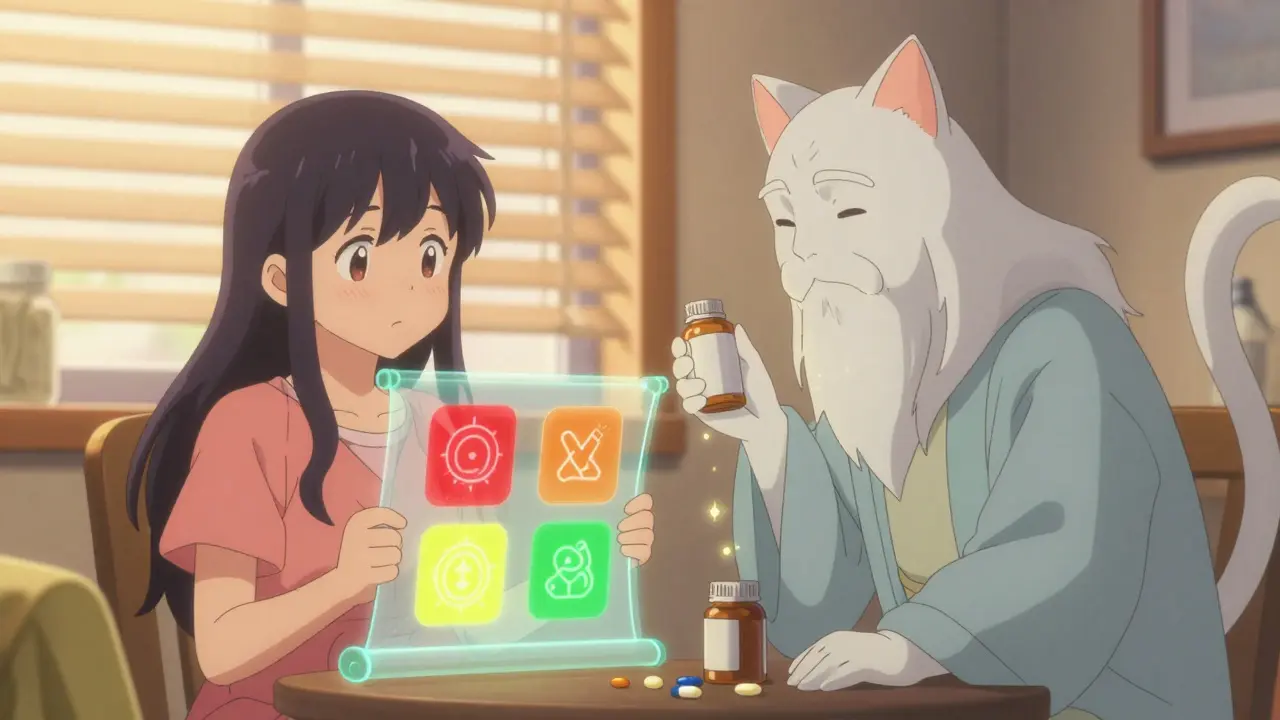
Why Generics Make This Harder
Generics aren’t the problem. The problem is assuming they’re all the same.
Take levothyroxine. The FDA says all generics are bioequivalent. But in real life, switching brands can cause your TSH levels to spike or crash. Why? Because the inactive ingredients affect how fast the pill dissolves. That changes how much gets into your blood.
Now imagine you’re on levothyroxine, warfarin, and a generic statin. One change in any of them - even just switching pharmacies - can trigger a chain reaction. Your INR might jump. Your muscles might ache. Your heart might race.
That’s why checking interactions isn’t a one-time thing. It’s a habit. Every time your prescription changes - even if it’s just a different generic - run it through a tool. Don’t wait for symptoms. Don’t assume your pharmacist caught it.
What You Can Do Right Now
You don’t need to be a doctor to use these tools. Here’s how to protect yourself:
- Download Epocrates (free on iOS and Android). It’s the easiest place to start.
- Enter every medication you take - including vitamins, supplements, and over-the-counter painkillers.
- Check again every time your prescription changes, even if it’s the same drug from a different pharmacy.
- Share the results with your pharmacist or doctor. Don’t just say “I’m on meds.” Show them the report.
- If you’re on 5+ drugs, ask your provider if you can reduce them. Polypharmacy is the biggest risk factor.
One patient in Madison, 72, was on 11 medications. She took her list to her pharmacist. The pharmacist ran it through Epocrates. They found three interactions: one could cause dizziness and falls, another raised her potassium to dangerous levels, and a third made her blood thinner less effective. All three were from generic versions she’d switched to over the past year. They changed two prescriptions. She hasn’t fallen since.
The Future Is Predictive
These tools are getting smarter. In early 2024, DDInter released Version 2.0 with machine learning that predicts interactions not yet in the database. Merative bought a startup called InteracDx to do the same for Micromedex. The goal? Move from “this combo is risky” to “this combo will likely cause kidney damage in 72 hours for someone with your profile.”
That’s powerful. But it’s not here yet. Right now, the best tool is still the one you use consistently. Not the fanciest. Not the most expensive. The one you open every time you get a new script.
The FDA says over 1,500 new drug interactions are discovered every year. That’s more than four a day. No human can memorize them all. But a digital tool? It can. And if you’re taking generics - which most of us are - you need it.
Are generic drugs more likely to cause interactions than brand-name drugs?
No. Generic drugs contain the same active ingredient as brand-name versions. But differences in fillers, coatings, or release rates can affect how your body absorbs them - especially with narrow-therapeutic-index drugs like warfarin, levothyroxine, or seizure medications. These small changes can make interactions more likely when switching generics. Always check interactions after any switch, even if the drug name is the same.
Can I trust free drug interaction checkers?
Yes - but with limits. Epocrates and DDInter offer free, reliable interaction checks with strong coverage. DrugBank’s free version only shows basic alerts and blocks deeper details. If you’re managing more than three medications, Epocrates is your best free option. Avoid tools that require payment just to see if two drugs clash - that’s not normal. Legitimate clinical tools offer core safety features for free.
Do these tools check herbal supplements and OTC drugs?
Epocrates does - and that’s why it’s so popular. It includes St. John’s wort, ginkgo, garlic, and even common pain relievers like ibuprofen and acetaminophen. Many hospital tools like Micromedex cover these too. But DrugBank and DDInter focus mostly on prescription drugs. If you take supplements, always include them in your check. They’re not harmless.
What if my doctor says the interaction isn’t a problem?
Ask for specifics. Doctors know the guidelines, but they’re human. They might miss a recent study or overlook your age, kidney function, or other meds. Say: “I saw this warning in Epocrates. Can you explain why it’s safe for me?” If they can’t give a clear, personalized answer, get a second opinion from a pharmacist. Pharmacists specialize in drug interactions - and they’re often the best resource.
How often should I check my medications?
Every time you get a new prescription, refill, or change pharmacies. Also check every 6 months if you’re on 5+ medications. Your body changes. Your kidneys slow down. Your liver processes drugs differently. What was safe last year might not be today. Don’t wait for symptoms. Prevention beats reaction.
Do these tools work for older adults?
They’re essential for older adults. The average person over 65 takes 4.8 prescription drugs. That’s a recipe for interactions. Tools like Epocrates and Micromedex let you filter by age, kidney function, and liver status - critical for seniors. Always use those filters. Many interactions that are harmless in young people become dangerous after 65.
What’s Next?
Start with Epocrates. It’s free. It’s simple. It’s trusted by millions. Enter your meds. Check them again next month. Share the results. You don’t need to be an expert to use it. You just need to care enough to try.
Medication safety isn’t about avoiding all risk. It’s about knowing the risks - and having a plan. Digital tools don’t replace your doctor. They give you the power to ask better questions. And in a world of generics, that’s not just helpful. It’s necessary.
Stacy Thomes
January 24, 2026 AT 00:15This changed my life. I was on seven meds and didn’t even know two of them were fighting each other like cats in a sack. Epocrates flagged it-turns out my generic levothyroxine and blood thinner were turning my TSH into a rollercoaster. I switched back to the same brand, and now I don’t feel like a zombie at 3 p.m. Don’t wait until you collapse. Check your pills. Seriously. Just do it.
dana torgersen
January 25, 2026 AT 16:58okay so… like… i’ve been using ddinter for like… forever?? and it’s free?? and i don’t even need to log in?? but… wait… what if… like… your pharmacist just… switches your generic without telling you?? and you don’t check?? and then… you just… die?? i mean… not die die… but like… your kidneys… they… just… give up??
Janet King
January 27, 2026 AT 04:36The data presented is accurate and aligns with current clinical guidelines. Digital interaction tools serve as essential decision-support systems, particularly in polypharmacy scenarios. Epocrates remains the most accessible platform for outpatient use due to its comprehensive database, user-friendly interface, and lack of financial barriers. The 2023 JAMA study on alert fatigue is corroborated by multiple institutional audits. Customization of alert thresholds reduces clinical noise and improves adherence to high-risk warnings. It is recommended that all patients on five or more medications perform monthly reviews using validated tools.
Vanessa Barber
January 28, 2026 AT 05:10Yeah but what if the tool just says 'green' because it doesn't know you're 80 and your kidneys are made of dust? These apps are great until they're wrong. I had one tell me it was fine to take ibuprofen with my blood pressure med. Two weeks later I was in the ER. Turns out the tool didn't factor in my age, my fluid intake, or the fact that I'm basically a walking kidney failure. So yeah. Trust the app. Sure. Why not.
charley lopez
January 29, 2026 AT 19:24While Epocrates offers robust interaction screening, its algorithmic architecture lacks granular pharmacokinetic modeling. The absence of pharmacogenomic integration-particularly for CYP450 polymorphisms-limits predictive accuracy in elderly populations. Furthermore, the assumption that generic bioequivalence equates to therapeutic equivalence is empirically flawed in narrow-therapeutic-index drugs. The FDA’s 80–125% AUC range for bioequivalence permits clinically significant variability in absorption kinetics. A systems-level approach integrating EHR-based CDS with real-time lab data is required for risk mitigation.
Susannah Green
January 30, 2026 AT 04:23Just wanted to add-don’t forget the OTC stuff! I took melatonin and ibuprofen together for a week and didn’t think twice. Then my blood pressure went nuts. Epocrates caught it-turns out melatonin can interfere with blood pressure meds, especially when combined with NSAIDs. I thought supplements were ‘natural’ so they were safe. Nope. They’re drugs too. Always add them. Even the ‘harmless’ ones. Seriously. Do it.
Oladeji Omobolaji
January 30, 2026 AT 11:31Back home in Nigeria, we don’t even have these apps. We just take what the pharmacy gives. Sometimes the same pill looks different every time. We don’t know if it’s the same drug or not. My aunt died because her blood pressure pill changed and no one told her. I wish this was available where I’m from. Not everyone lives in the U.S. with free apps. This is life-saving stuff-and it’s not fair it’s only for some.
Sallie Jane Barnes
February 1, 2026 AT 03:15Thank you for writing this with such clarity and care. I’ve been a pharmacist for 22 years, and I’ve seen too many patients assume their meds are ‘the same’ just because the name matches. I’ve also seen doctors dismiss patient concerns because ‘the computer said it was fine.’ This post gives people the language and tools to advocate for themselves. Please share it with your friends, your parents, your neighbors. Knowledge is the only thing that can’t be taken from you. And if you’re on more than five meds? Check them. Every. Single. Time.