 Jan, 29 2026
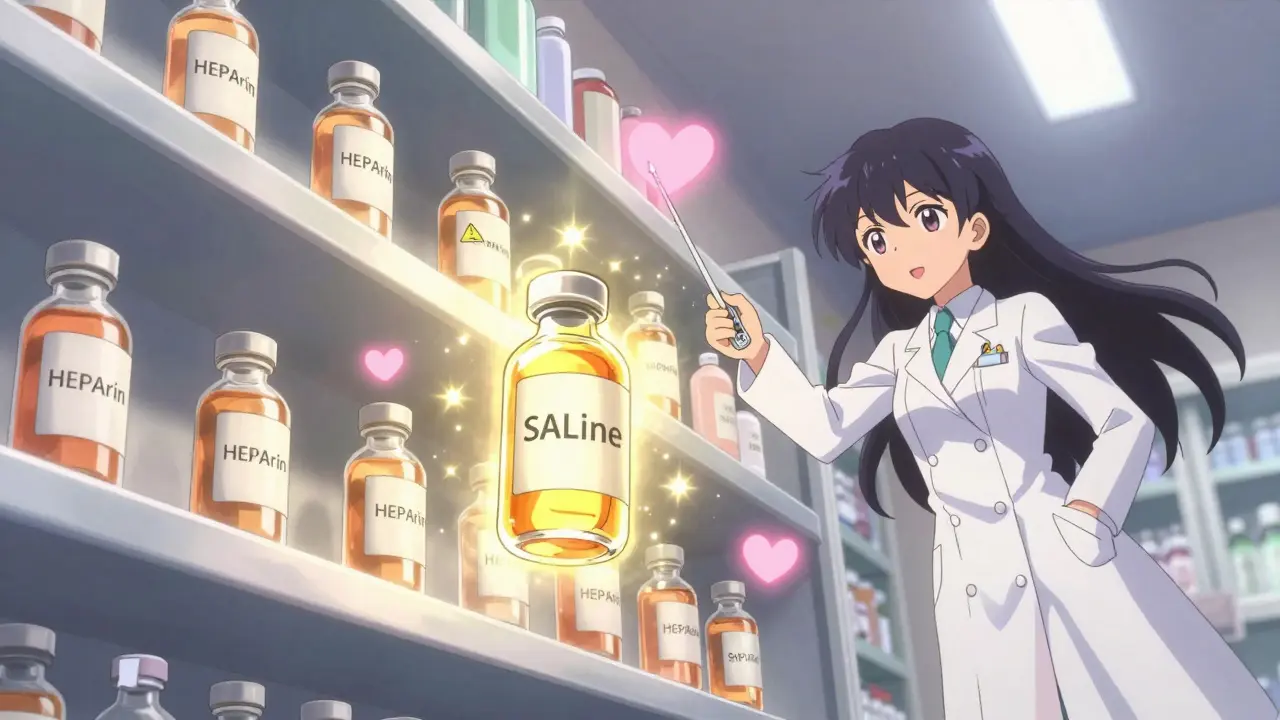
Every year, thousands of patients in the UK and US receive the wrong medication-not because of a mistake in prescribing, but because two drugs look too much alike on the shelf. A vial of heparin next to a vial of saline. A box of spironolactone sitting beside spiramycin. At a glance, they’re nearly identical. And in a busy pharmacy, especially during rush hours, that’s all it takes for a deadly error to happen.
Why Look-Alike Packaging Is a Silent Killer
It’s not just about names that sound alike-like hydralazine and hydroxyzine. The real danger comes from packaging that tricks the eye. Similar bottle shapes, identical colour schemes, matching font sizes, and even the same placement of warning stickers can make two completely different drugs look like twins. The Institute for Safe Medication Practices (ISMP) says about 20% of all medication errors stem from confusing packaging, not just confusing names. In the US alone, these errors contribute to around 7,000 deaths each year. That’s more than car accidents involving teens. And it’s entirely preventable.In the UK, the Medicines and Healthcare products Regulatory Agency (MHRA) has flagged this as a top-priority safety issue since 2020. But while hospitals have made progress, community pharmacies-especially small, high-volume ones-are still playing catch-up. The problem isn’t lack of awareness. It’s lack of consistent action.
Physical Separation: The Simplest Fix That Works
You don’t need fancy tech to start reducing errors. The most effective first step? Move the confusing drugs apart.At a hospital in Bristol, pharmacists noticed they were accidentally pulling insulin glargine instead of insulin lispro three to four times a month. Both came in similar white plastic pens with blue caps. The solution? They moved insulin glargine to a dedicated shelf in the back, marked with a red border and a bold sign: “INSULIN GLARGINE - LONG-ACTING - DO NOT CONFUSE.” Within 18 months, the errors dropped to zero.
Physical separation doesn’t have to cost much. Shelf dividers from a medical supply vendor cost under £50. You can use coloured tape, sticky labels, or even just reorganising the storage layout. The University of Arizona found that separating look-alike drugs reduced errors by 62%. That’s not a guess-it’s data. And it works even when staff are tired, rushed, or distracted.
But here’s the catch: it only works if you do it consistently. If you move insulin glargine to the back today, but put it back next to lispro next week because “we’re out of space,” you’re back to square one. Make separation part of your daily checklist. Train new staff on it. Put it in your standard operating procedures.
Tall Man Lettering: Make the Differences Impossible to Miss
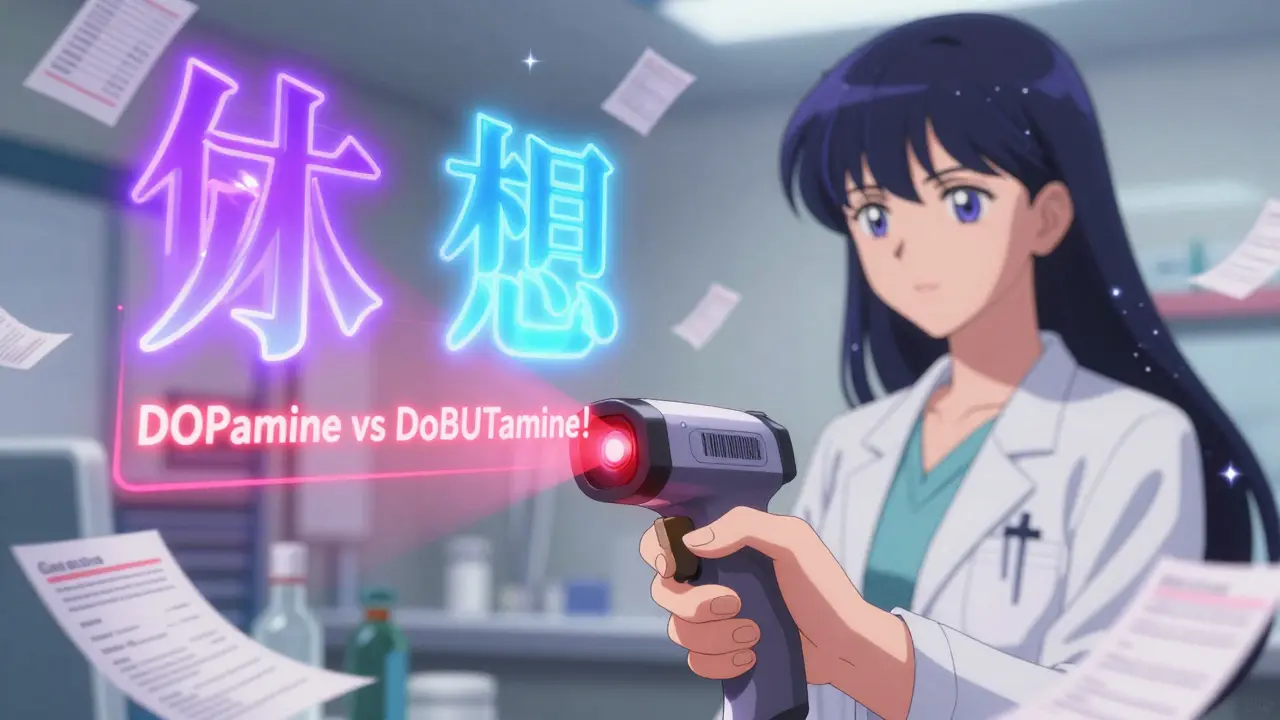
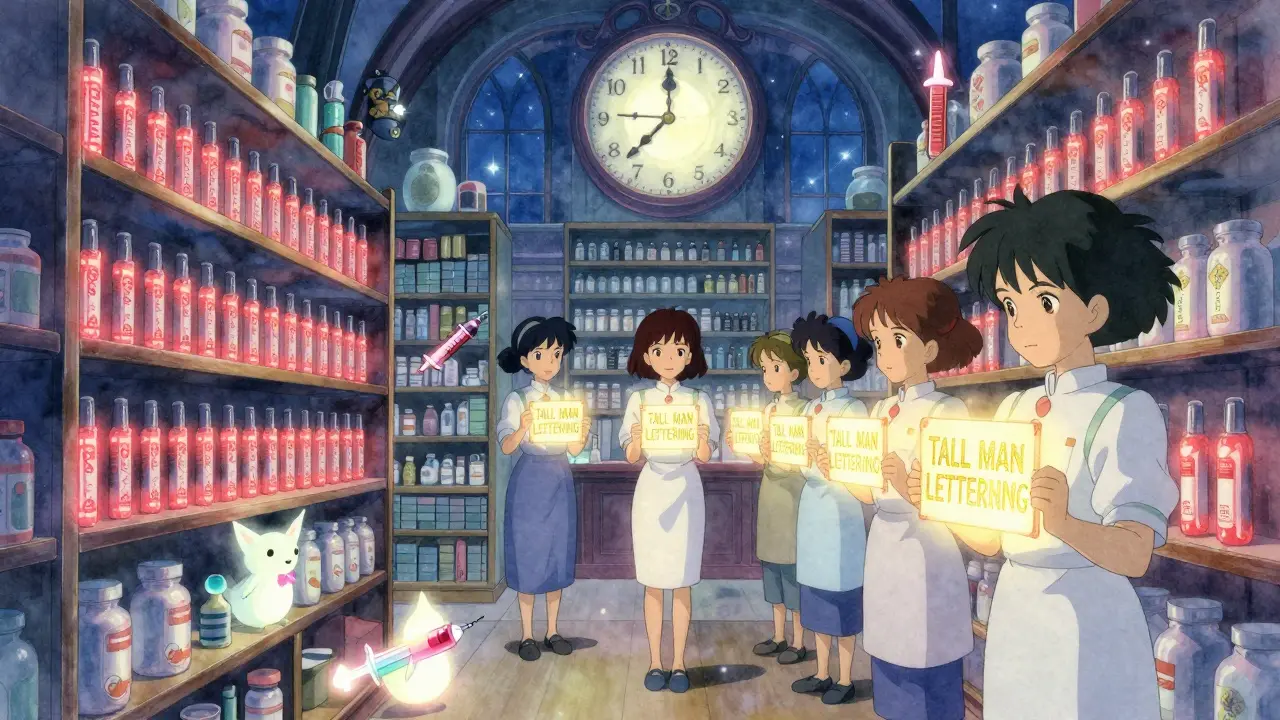
When two drug names are almost the same-DOPamine and DoBUTamine, for example-the brain fills in the gaps. It sees what it expects to see. Tall Man Lettering (TML) forces the eye to pause and read the difference.TML uses uppercase letters to highlight the part of the name that differs. So instead of writing “Dopamine” and “Dobutamine,” you write “DOPamine” and “DoBUTamine.” It sounds small. But studies show it cuts selection errors by 47%. The FDA recommends it for over 100 high-risk drug pairs. ISMP updates their list quarterly, and in January 2024, they added 17 new pairs, including buprenorphine and butorphanol.
But here’s the problem: not all systems display TML the same way. If your electronic health record (EHR) shows “Dopamine” but the pharmacy label says “DOPamine,” the pharmacist sees a mismatch. That’s worse than no TML at all. In a 2022 survey, 43% of pharmacists said inconsistent TML formats caused confusion during patient handoffs.
Fix this by standardising. Ask your EHR vendor to enable TML across all screens. Print labels with TML using your pharmacy software. If you’re using paper labels, print them with the correct formatting. Don’t rely on someone to remember to capitalise letters manually. Automate it. And if your system doesn’t support it? Push back. This isn’t optional-it’s a safety requirement under The Joint Commission’s Standard MM.05.01.09.
Barcode Scanning: The Final Safety Net
Physical separation and TML help prevent errors before they happen. But barcode scanning catches the ones that slip through.When a pharmacist scans a medication before dispensing, the system checks: Is this the right drug? The right patient? The right dose? The right time? If there’s a mismatch, it alarms. A 2021 AHRQ report found that full barcode implementation reduces medication administration errors by 86%. That’s not a minor improvement-it’s life-saving.
Some pharmacies skip this because it costs £15,000-£50,000 to install. But you don’t need to go all-in at once. Start with high-risk areas: anticoagulants, insulin, opioids, chemotherapy. Use a handheld scanner for those. If you’re using automated dispensing cabinets (ADCs), make sure they’re set to require a scan before release. And if staff are bypassing the scan? That’s not a tech problem-it’s a culture problem.
At Mayo Clinic, they made scanning mandatory and added daily audits. In 12 months, they eliminated 100% of potential errors with heparin and saline. That’s not luck. That’s discipline.
Label Design: Don’t Let Packaging Betray You
Packaging isn’t just about the bottle. It’s about the label. The font size. The colour contrast. The placement of the drug name versus the strength.The FDA’s 2021 guidance says labels must be designed to reduce visual confusion. That means:
- Drug names must be the largest text on the label
- Strength must be clearly separated from the name, not tucked in the corner
- Avoid using all caps for the entire drug name-it makes everything look the same
- Use colour coding only if it’s consistent across all products (e.g., red for high-alert meds)
Many generic drugs come with labels designed by manufacturers who care more about cost than clarity. If your pharmacy receives a new generic version of a drug that looks too similar to another, flag it. Don’t just accept it. Contact the supplier. Ask for a revised label. Or, if needed, switch to a different manufacturer. Your patients’ lives depend on it.
Staff Training and Culture: The Human Element
Technology helps. But people prevent errors.A 2023 survey found that 78% of pharmacy directors say staff resistance is the biggest barrier to implementing safety measures. Why? Because change is hard. Because “we’ve always done it this way.”
Fix this by making safety part of your daily rhythm. Start every shift with a 5-minute huddle: “Today, watch out for spironolactone and spiramycin.” Put up posters in the dispensing area showing the top 5 look-alike pairs in your pharmacy. Run monthly drills: “What would you do if someone asked for ‘DOPamine’ but the label says ‘Dopamine’?”
And reward vigilance. If a tech catches a mislabelled bottle before it goes out, thank them publicly. Make it part of your quality assurance checklist. When people feel their attention matters, they pay attention.
What to Do Right Now
You don’t need to fix everything tomorrow. But you need to start today. Here’s your 30-day action plan:- Download ISMP’s 2024 List of Confused Drug Names. Highlight the ones you stock.
- Walk through your pharmacy. Find any two drugs that look similar. Move them apart.
- Check your labels. Are drug names in Tall Man Lettering? If not, update your printing templates.
- Set up a daily scan for high-risk drugs-even if you have to buy a £200 handheld scanner.
- Hold a team meeting. Show them the data. Say: “We’re not going to let someone get the wrong drug because we didn’t look closely enough.”
The goal isn’t perfection. It’s progress. One less error. One less family broken by a preventable mistake.
What’s Next? The Future Is Here
New tools are coming. AI systems at Johns Hopkins can now scan images of drug packaging and flag look-alike pairs before they even hit the shelf. The National Council for Prescription Drug Programs (NCPDP) is rolling out a standardised LASA data format by late 2025, so pharmacies will automatically get alerts when new drugs are added that match existing ones.But none of that matters if you don’t do the basics now. Physical separation. Clear labels. Barcode scans. Staff awareness. These aren’t new ideas. They’re proven. And they work.
The next time you pick up a bottle, pause. Look at it like you’ve never seen it before. Ask: Could this be mistaken for something else? If the answer is yes-you’ve just saved a life.
What are the most common look-alike drug pairs in UK pharmacies?
The most frequent pairs include: insulin glargine and insulin lispro, heparin and saline, spironolactone and spiramycin, hydralazine and hydroxyzine, and dobutamine and dopamine. In 2024, ISMP added buprenorphine and butorphanol to the list. These pairs are often confused because they share similar spellings, packaging colours, or bottle shapes. Always check your local pharmacy’s error reports-some regions have unique problem pairs based on local prescribing habits.
Is Tall Man Lettering required by law in the UK?
No, it’s not legally required in the UK, but it’s strongly recommended by the MHRA and is part of the National Patient Safety Goals. The NHS and most hospital trusts require it as part of their internal safety policies. The Joint Commission in the US mandates it, and UK pharmacies following international standards often adopt it to reduce liability and improve safety. Ignoring it increases the risk of regulatory scrutiny if an error occurs.
Can barcode scanning be used in small community pharmacies?
Absolutely. You don’t need a full automated system. A £200-£500 handheld barcode scanner connected to your pharmacy software can be enough. Focus on high-risk drugs first: anticoagulants, insulin, opioids, and sedatives. Many software providers offer modular upgrades for small pharmacies. The cost is far less than the potential cost of a single dispensing error-both financially and in terms of reputation.
What should I do if a manufacturer sends me a drug with confusing packaging?
Don’t accept it without action. Contact the supplier and request a label redesign or an alternative product. Document the issue and report it to the MHRA’s Yellow Card scheme. If the packaging is dangerously similar to another drug you stock, temporarily store it in a separate, clearly marked location until resolved. Never assume the manufacturer has considered patient safety-it’s your responsibility to protect your patients.
How often should I review my pharmacy’s look-alike risks?
At least every six months, or whenever you add a new drug to your inventory. ISMP updates its list of confused drug pairs quarterly. Set a calendar reminder to cross-check your stock against the latest list. Also, review any near-misses or errors that occurred in the past six months. If you’ve had two errors involving the same pair, it’s time to re-evaluate your separation strategy or add a new safeguard.
Jason Xin
January 29, 2026 AT 16:53Physical separation works, but only if you actually enforce it. I’ve seen pharmacies move the drugs apart, then put them back because someone complained about ‘walking too far.’ It’s not a tech problem-it’s a culture problem. And no, putting a sticky note on the shelf doesn’t count as a fix.
Donna Fleetwood
January 30, 2026 AT 00:16This is the kind of post that makes me proud to work in pharmacy. Small changes = huge impact. I started using colored tape for high-alert meds last month and already caught two near-misses. No fancy tech, just attention. We’re not superheroes-we’re just paying attention.
Kelly Weinhold
January 30, 2026 AT 13:23Okay but let’s be real-how many of us have actually read the ISMP list? I mean, I’ve got it bookmarked, but I haven’t opened it since 2022. And then I get a new generic version of something and think, ‘eh, it looks fine.’ Spoiler: it’s not fine. We’re all guilty of this. The fact that you listed 17 new pairs this year? That’s terrifying. And also a wake-up call. Let’s stop pretending we’re doing enough. Start with one pair. Just one. Move it. Label it. Then breathe. Then do another.
Kimberly Reker
February 1, 2026 AT 12:08Tall Man Lettering is the quiet hero of pharmacy safety. I used to think it was overkill-until I saw a nurse hand a patient the wrong insulin because the label looked identical. After that, I made sure every label in my section uses TML. No exceptions. Even if the EHR doesn’t display it right, we print it right. It’s not about convenience. It’s about not killing someone because you were too lazy to capitalize a letter.
Eliana Botelho
February 3, 2026 AT 06:38Wait, so you’re telling me we’re supposed to spend £50,000 on barcode scanners when we could just… train people to read better? I’ve worked in pharmacies for 18 years and never had a fatal error. You’re acting like we’re all about to become medical murderers because we didn’t buy a £200 scanner. The real problem is lazy staff who don’t double-check. Not packaging. Not labels. People. Fix the people, not the system. Also, why is everyone so obsessed with ‘high-alert meds’? Isn’t every med high-alert if you give it wrong?
Rob Webber
February 3, 2026 AT 09:50This entire post is a waste of time. You think moving bottles apart fixes anything? The real issue is that pharmacists are overworked, underpaid, and rushed. No amount of tape, labels, or scanners will fix that. Stop blaming the packaging. Blame the system that makes us work 12-hour shifts with no breaks. You want to save lives? Pay us more. Give us more staff. Stop pretending a red sticker is a solution.
Lisa McCluskey
February 3, 2026 AT 21:30Barcodes work. I’ve seen it. But only if you don’t let staff bypass them. We had a tech who’d scan and then hit ‘ignore’ because it was ‘too slow.’ We started doing random audits. One week later, zero bypasses. Simple. No drama. Just accountability.
owori patrick
February 4, 2026 AT 20:50In Nigeria, we don’t have barcode scanners or fancy EHRs. But we do have time. We double-check names out loud. We ask patients: ‘Is this your medication?’ We write the name on the bag. Simple. Human. And it works. You don’t need tech to care. You just need to care enough to pause.
Claire Wiltshire
February 5, 2026 AT 02:19Thank you for this comprehensive, evidence-based breakdown. The integration of physical separation, tall man lettering, and barcode scanning isn’t just best practice-it’s an ethical imperative. I’ve shared this with our entire team, and we’re implementing a monthly review of high-risk pairs starting next week. Every life matters, and every precaution counts.
Darren Gormley
February 5, 2026 AT 16:02LOL. You’re all acting like this is new. I’ve been screaming about this since 2017. The MHRA? They’ve been asleep at the wheel. And now you’re all acting like you just discovered fire. Meanwhile, my pharmacy still gets heparin and saline mixed up because the supplier keeps sending them in identical bottles. No one listens. 😒
Russ Kelemen
February 6, 2026 AT 04:37It’s not about the labels or the scanners. It’s about the rhythm of attention. We live in a world that rewards speed, not care. But medicine? Medicine demands slowness. The moment you stop seeing a vial as a thing to grab and start seeing it as a life waiting to be saved-that’s when the real change happens. You don’t fix systems. You fix presence.
Beth Beltway
February 6, 2026 AT 23:56Just read the FDA guidelines. You’re all wasting time with tape and stickers. The real issue is that 80% of community pharmacies don’t even have a safety officer. You’re not ‘preventing errors’-you’re just hoping for the best. If you don’t have a formal safety program with documented policies, audits, and staff evaluations, you’re not doing your job. You’re gambling with lives. And that’s not ‘cautious’-it’s negligent.
Marc Bains
February 8, 2026 AT 06:42Just came back from a trip to Ghana. Their pharmacies don’t have barcode scanners or TML. But every pharmacist calls out the drug name to the patient before handing it over. They say it twice. They show the label. They ask, ‘Is this what your doctor told you?’ Simple. Human. Effective. Maybe we don’t need more tech. Maybe we just need to remember how to talk to each other.