 Jun, 11 2026
Opioid-Induced Hyperalgesia (OIH) vs. Tolerance Symptom Checker
Select the symptoms you are experiencing:
Quick Reference
Opioid Tolerance:
- • Drug effect decreases over time.
- • Pain level remains stable.
- • Localized to original injury/surgery site.
Opioid-Induced Hyperalgesia (OIH):
- • Sensitivity to pain increases.
- • Pain becomes diffuse/spread out.
- • Non-painful stimuli hurt (Allodynia).
Analysis Result
Please select symptoms above to see analysis.
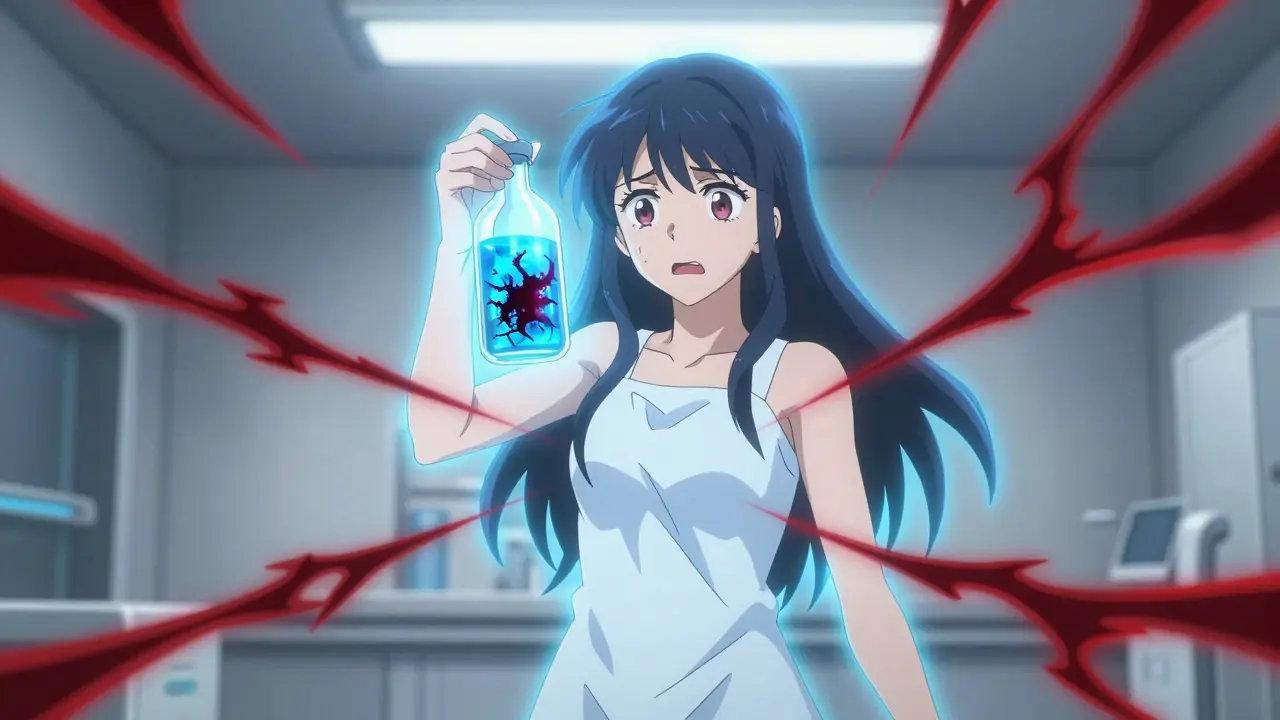
You take your pain medication exactly as prescribed. You feel the relief wearing off faster than before. So, you or your doctor increase the dose. But instead of feeling better, the pain gets worse. It spreads to areas that weren't hurting yesterday. Even a light touch feels like a burn. This isn't just "bad luck" or a worsening condition. It might be Opioid-Induced Hyperalgesia (OIH), a paradoxical state where opioids actually make you more sensitive to pain.
This phenomenon is confusing and frustrating. It contradicts everything we think we know about pain management. If pills stop pain, shouldn't more pills stop more pain? In the case of OIH, the answer is no. Understanding this condition is critical for anyone on long-term opioid therapy, their families, and healthcare providers. Recognizing it early can prevent dangerous dose escalations and improve quality of life.
What Is Opioid-Induced Hyperalgesia?
Opioid-Induced Hyperalgesia is a neuroadaptive phenomenon. Simply put, your nervous system changes how it processes pain signals after prolonged exposure to opioids. Instead of dampening pain, the drugs start amplifying it. This was first documented in rats in 1971 by researchers Way et al., who noticed that repeated morphine injections made the animals more sensitive to heat and touch. Today, we see similar patterns in humans.
The key distinction here is between tolerance and hyperalgesia. Tolerance means you need a higher dose to get the same effect. The pain level stays the same, but the drug's power drops. Hyperalgesia means the pain itself increases. Your threshold for what counts as "painful" lowers significantly. A pinprick might feel like a stab wound. This difference matters because the treatment for each is opposite. Treating tolerance with more opioids makes hyperalgesia worse.
| Feature | Opioid Tolerance | Opioid-Induced Hyperalgesia (OIH) |
|---|---|---|
| Pain Perception | Unchanged; drug effect decreases | Increased; sensitivity to pain rises |
| Pain Distribution | Localized to original site | Diffuse; spreads beyond original area |
| Response to Dose Increase | Temporary relief returns | Pain worsens or remains unchanged |
| Allodynia (Pain from non-painful stimuli) | Rare | Common (e.g., clothing feels painful) |
| Treatment Approach | Dose escalation or rotation | Dose reduction, NMDA antagonists |
How Does OIH Develop? The Biological Mechanisms
Your body doesn't just sit still while taking opioids. It adapts. When you introduce opioids into your system, they bind to mu-opioid receptors in the brain and spinal cord. This blocks pain signals. But your nervous system hates imbalance. To compensate, it activates other pathways designed to promote pain signaling. Several mechanisms drive this process:
- NMDA Receptor Activation: This is the most common pathway. Opioids trigger the release of nitric oxide, which supercharges N-methyl-D-aspartate (NMDA) receptors. These receptors are essentially "volume knobs" for pain. When they're overactive, every pain signal gets turned up to eleven.
- Dynorphin Release: Your spine releases dynorphin, an excitatory neuropeptide. Think of it as a chemical that screams "pain!" louder than usual, overriding the opioid's quieting effect.
- Descending Facilitation: Normally, your brain sends signals down the spinal cord to inhibit pain. In OIH, these pathways flip. They start facilitating pain transmission instead of blocking it.
- Genetic Factors: Variations in the COMT enzyme, which breaks down dopamine and noradrenaline, can make some people genetically predisposed to OIH. If your body clears these neurotransmitters slowly, you may be at higher risk.
These changes happen at the cellular level in the dorsal horn of the spinal cord and the dorsal root ganglion. It's a form of central sensitization, similar to what happens in chronic neuropathic pain conditions like fibromyalgia.

Recognizing the Symptoms: Is It OIH?
Diagnosing OIH is tricky because there's no simple blood test. Doctors rely on clinical observation and patient reports. Here’s what to look out for:
- Worsening Pain Despite Higher Doses: You increase your medication, but the pain intensity climbs anyway. This is the hallmark red flag.
- Diffuse Pain Spread: Originally, maybe only your knee hurt. Now, your entire leg, hip, and lower back ache. The pain loses its boundaries.
- Allodynia: You feel pain from things that shouldn't hurt. The weight of a blanket, the brush of a shirt sleeve, or a gentle tap causes sharp discomfort.
- Hyperexcitability: Some patients experience muscle twitching (myoclonus), confusion, or even seizures due to the nervous system being in overdrive.
It’s crucial to rule out other causes first. Is the underlying disease progressing? Are you experiencing withdrawal symptoms between doses? Could psychological factors like anxiety or depression be amplifying the pain? A thorough medical evaluation is necessary before labeling it OIH.
Treatment Strategies: Breaking the Cycle
If you suspect OIH, continuing to escalate the opioid dose is like pouring gasoline on a fire. The goal is to calm the sensitized nervous system. Treatment usually involves a multi-step approach:
1. Opioid Dose Reduction
Paradoxically, lowering the opioid dose often reduces pain in OIH patients. By removing the stimulus causing the sensitization, the nervous system can begin to reset. This must be done carefully under medical supervision to avoid acute withdrawal, which can also mimic pain spikes.
2. Opioid Rotation
Switching to a different opioid can help. Methadone is particularly effective because it acts as both a mu-opioid agonist and an NMDA receptor antagonist. While most opioids only block pain, methadone also turns down the "volume knob" of the NMDA receptors. Studies show switching to methadone can reduce postoperative opioid needs by up to 40% and alleviate hyperalgesic symptoms.
3. Adjunctive Medications
Doctors often add non-opioid drugs to target specific mechanisms:
- Ketamine: Used at low, sub-anesthetic doses (0.1-0.5 mg/kg/hour), ketamine directly blocks NMDA receptors. It’s a powerful tool for reversing OIH.
- Magnesium Sulfate: Another NMDA antagonist that can be administered intravenously or orally.
- Gabapentin or Pregabalin: These alpha-2-delta ligands modulate calcium channels, reducing the release of excitatory neurotransmitters. Typical doses range from 900-3600 mg/day for gabapentin and 150-600 mg/day for pregabalin.
4. Non-Pharmacological Approaches
Cognitive behavioral therapy (CBT) and physical therapy can help retrain the brain's response to pain. Since OIH involves central sensitization, therapies that focus on relaxation, mindfulness, and gradual movement can desensitize the nervous system over time.

Who Is at Risk?
While anyone on opioids can develop OIH, certain groups face higher risks:
- High-Dose Users: Patients receiving large parenteral (IV) doses of morphine or hydromorphone are more susceptible.
- Renal Failure Patients: Kidneys filter out toxic opioid metabolites like morphine-3-glucuronide. If kidneys aren't working well, these toxins build up and exacerbate hyperalgesia.
- Genetic Predisposition: Individuals with low-activity COMT gene variants have trouble clearing catecholamines, making them more sensitive to pain modulation changes.
- Surgical Patients: High intraoperative opioid use has been linked to increased postoperative pain requirements, suggesting perioperative OIH is a real concern.
Why Early Recognition Matters
The danger of OIH lies in the cycle of escalation. A patient feels more pain. The doctor prescribes more opioids. The pain gets worse. The dose goes up again. This loop can lead to dangerously high opioid levels without providing any relief, increasing the risk of overdose, respiratory depression, and other side effects. Recognizing OIH breaks this cycle. It shifts the strategy from "more drug" to "different mechanism," leading to safer and more effective pain management.
Can Opioid-Induced Hyperalgesia be reversed?
Yes, OIH is generally reversible. By reducing the opioid dose, rotating to a different agent like methadone, or adding NMDA antagonists like ketamine, the nervous system can reset. However, it requires careful medical supervision to manage the transition safely.
How long does it take for OIH symptoms to appear?
The timeline varies. It can occur within days of starting high-dose opioids or develop gradually over months or years of chronic use. There is no fixed timeframe, which makes monitoring symptom patterns crucial.
Is OIH the same as addiction?
No. Addiction involves compulsive drug-seeking behavior despite harm, driven by reward pathways in the brain. OIH is a physiological change in pain processing. A person with OIH may want more pain relief not because they crave the drug, but because they are genuinely in more pain.
What role do genetics play in OIH?
Genetics influence susceptibility. Variations in the COMT enzyme affect how your body handles stress hormones and neurotransmitters related to pain. People with certain genetic profiles may be more prone to developing central sensitization when exposed to opioids.
Should I stop my opioids if I suspect OIH?
Never stop opioids abruptly without medical advice. Sudden cessation can cause severe withdrawal and rebound pain, complicating the diagnosis. Consult your healthcare provider to create a safe tapering or rotation plan.