 Jan, 28 2026
If you take medication and enjoy a glass of pomegranate juice every morning, you might be wondering: is this safe? It’s not just about sugar or antioxidants. Pomegranate juice can change how your body handles certain drugs - sometimes in ways that aren’t obvious until something goes wrong.
How Pomegranate Juice Affects Your Medications
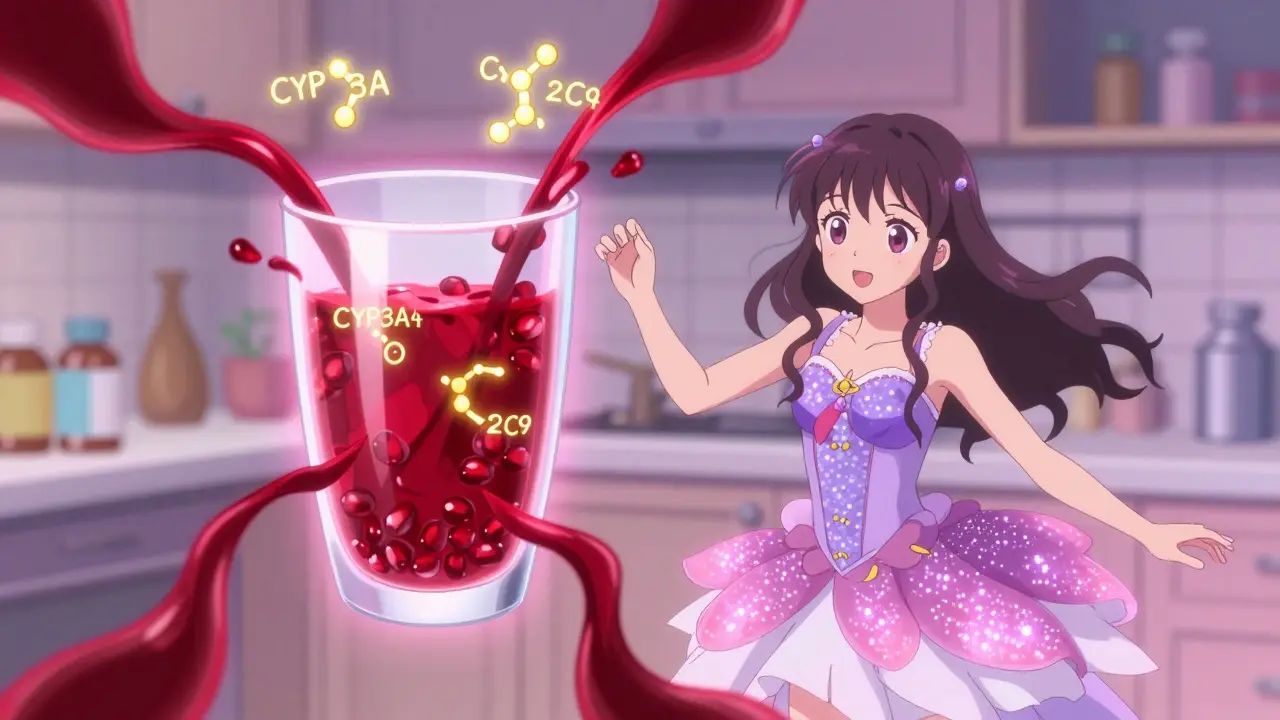
Pomegranate juice doesn’t just taste good. It contains powerful plant compounds called punicalagins and ellagitannins. These are what give the juice its deep red color and high antioxidant levels. But they also interfere with enzymes in your gut and liver that break down medications. The two biggest enzymes involved are CYP3A4 and CYP2C9. Together, they handle about 60% of all prescription drugs you might take.
When these enzymes get blocked, your body doesn’t clear the drug as quickly. That means more of it stays in your bloodstream. For some medications, that’s harmless. For others, it can be dangerous. Think of it like a traffic jam on a highway - cars (medications) pile up because the exit ramps (enzymes) are closed.
Warfarin: The Biggest Red Flag
The clearest danger is with warfarin, a blood thinner used to prevent clots. Warfarin has a very narrow safety window. Too little, and you risk a clot. Too much, and you could bleed internally. Even small changes in blood levels matter.
Case reports show real-world problems. One patient on Reddit reported their INR - a measure of blood clotting time - jumped from 2.4 to 4.7 after starting daily pomegranate juice. That’s a dangerous spike. INR above 4.5 increases bleeding risk significantly. Their doctor had to cut their warfarin dose by 30% to bring it back down.
But here’s the twist: not everyone reacts the same way. A study of 214 warfarin users on PatientsLikeMe found that 89% saw no change in their INR after drinking pomegranate juice regularly. Another study of 12 healthy volunteers found no effect on midazolam, a drug often used to test CYP3A4 activity. So why the difference? Genetics, diet, how much juice you drink, and even the brand of juice might all play a role.
What Other Medications Could Be Affected?
While warfarin is the most documented case, other drugs might be at risk too. The FDA doesn’t list pomegranate juice as a known risk like grapefruit juice - which can spike statin levels by 15 times - but some experts still warn about caution.
- Statins like atorvastatin (Lipitor) - higher levels could mean muscle pain or rare but serious muscle damage.
- Antidepressants like quetiapine (Seroquel) - increased levels might cause dizziness, low blood pressure, or sedation.
- ACE inhibitors like lisinopril - pomegranate juice might add to their blood pressure-lowering effect, potentially causing dizziness or fainting.
- Immunosuppressants like cyclosporine - used after transplants. Even a small rise in levels can damage kidneys.
WebMD lists 17 medications with a "moderate interaction" rating for pomegranate juice. But "moderate" doesn’t mean it will definitely hurt you. It means there’s enough evidence to warrant caution - especially if you’re already on multiple drugs or have liver or kidney issues.

Why Grapefruit Juice Gets All the Attention
You’ve probably heard warnings about grapefruit juice and medications. That’s because grapefruit has a much stronger, more consistent effect. It doesn’t just inhibit enzymes - it destroys them. And it takes days for your body to make new ones. That’s why the FDA has clear warnings about grapefruit with statins, blood pressure meds, and more.
Pomegranate juice? It’s different. Lab studies show inhibition - sometimes up to 50% for CYP2C9. But human trials? Often no effect. The UK’s Medicines and Healthcare products Regulatory Agency (MHRA) says pomegranate juice might reduce warfarin metabolism by 15-25%. That’s not nothing. But it’s nowhere near the 15-fold increase grapefruit can cause.
Bottom line: grapefruit juice is a red light. Pomegranate juice is a yellow light - proceed with care, not panic.
What Should You Do?
Don’t stop drinking pomegranate juice unless your doctor tells you to. But do this:
- Know your meds. If you’re on warfarin, a statin, an antidepressant, or an immunosuppressant, talk to your pharmacist or doctor. Ask: "Could pomegranate juice affect this?"
- Be consistent. The American Heart Association says it’s safer to drink the same amount every day than to start and stop. Sudden changes are riskier than steady intake.
- Stick to 8 ounces or less per day. Mayo Clinic recommends this limit for people on warfarin. More than that increases the chance of interaction.
- Separate timing. Try to wait at least two hours between taking your medication and drinking the juice. This gives your body time to absorb the drug before the juice hits your gut.
- Monitor if you’re on warfarin. If you start or stop drinking pomegranate juice, ask your doctor to check your INR a week later. A small change in juice intake can shift your levels.

What About Supplements or Concentrates?
Pomegranate supplements - pills, powders, extracts - are even riskier than juice. They’re concentrated. One capsule might equal the polyphenol content of three glasses of juice. There’s almost no research on these with medications, but the potential for interaction is higher.
If you’re taking a supplement, tell your doctor. Don’t assume "natural" means safe. Many people think herbal products are harmless. They’re not. They’re powerful chemicals. And they don’t go through the same safety testing as prescription drugs.
The Bottom Line
Pomegranate juice isn’t a drug killer. It’s not grapefruit juice. For most people, a small glass a day is fine. But if you’re on medications that need tight control - like warfarin, certain antidepressants, or drugs after a transplant - you can’t afford to guess.
The science is mixed. Some studies show danger. Others show nothing. But medicine doesn’t wait for perfect proof. It waits for harm. And in rare cases, pomegranate juice has caused harm. That’s enough reason to be careful.
Don’t stop your juice. But do talk to your doctor. And if you’re on warfarin, keep a log: what you drank, when, and your latest INR. That simple habit might keep you out of the hospital.
Can I drink pomegranate juice while taking warfarin?
You can, but with caution. Some people experience increases in INR - the measure of blood thinning - after drinking pomegranate juice, while others don’t. If you take warfarin, stick to no more than 8 ounces per day, drink it at the same time every day, and get your INR checked within a week of starting or stopping regular consumption. Never make sudden changes.
Is pomegranate juice as dangerous as grapefruit juice?
No. Grapefruit juice can increase blood levels of some drugs by up to 15 times and permanently disable liver enzymes for days. Pomegranate juice causes much weaker, inconsistent effects. It may slightly raise levels of certain drugs, but it doesn’t destroy enzymes like grapefruit does. Still, caution is advised for high-risk medications.
Does pomegranate juice affect all medications?
No. Only medications metabolized by CYP3A4 or CYP2C9 enzymes are potentially affected. That includes warfarin, some statins, certain antidepressants, and immunosuppressants. Most common medications - like antibiotics, thyroid pills, or insulin - aren’t impacted. Always check with your pharmacist or use a reliable drug interaction checker.
Should I stop drinking pomegranate juice if I’m on medication?
Not necessarily. For most people, moderate, consistent consumption is safe. The bigger risk comes from switching between drinking it and not drinking it. If you’ve been drinking it regularly, keep doing so. If you haven’t, don’t start without talking to your doctor - especially if you’re on a narrow-therapeutic-index drug.
Are pomegranate supplements safer than juice?
No. Supplements are often more concentrated than juice and may contain higher levels of the compounds that interfere with drug metabolism. There’s very little research on their safety with medications. If you’re on any prescription drug, avoid pomegranate supplements unless your doctor approves them.
DHARMAN CHELLANI
January 30, 2026 AT 09:24Laura Arnal
January 31, 2026 AT 09:57Eli In
February 1, 2026 AT 06:39Paul Adler
February 2, 2026 AT 06:51Robin Keith
February 4, 2026 AT 00:21Sheryl Dhlamini
February 4, 2026 AT 22:39LOUIS YOUANES
February 6, 2026 AT 12:26ryan Sifontes
February 8, 2026 AT 06:08Megan Brooks
February 8, 2026 AT 11:54