 Jan, 8 2026
Hypertensive Crisis Risk Checker
Check if your medications may cause a hypertensive crisis when taken together. Enter all medications you're currently taking including prescription drugs, OTC products, and herbal supplements.
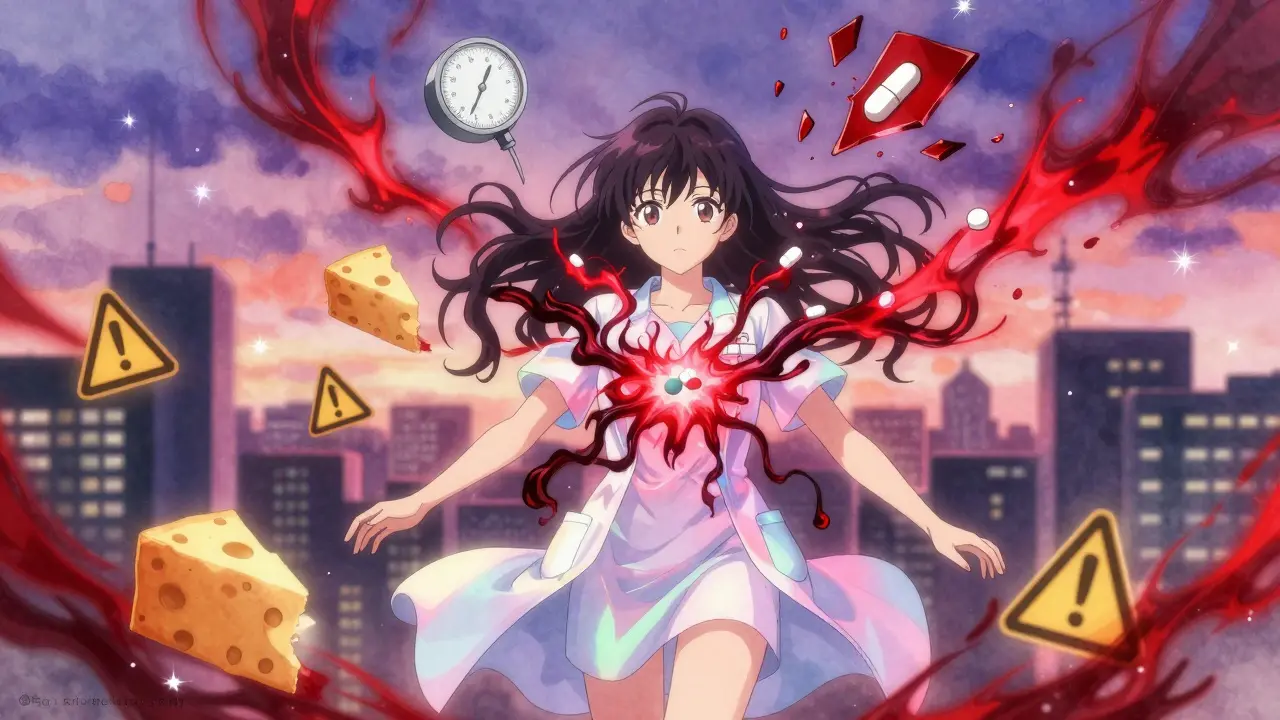
A severe hypertensive crisis isn’t just a high blood pressure reading-it’s a medical emergency that can kill within minutes. When certain drugs mix, even something as simple as a cold medicine or a piece of cheese can trigger a systolic pressure spike over 220 mmHg, rupturing blood vessels in the brain, heart, or kidneys. This isn’t rare. In fact, drug interactions cause nearly 1 in 5 cases of hypertensive crisis, and most doctors never see it coming.
What Exactly Is a Hypertensive Crisis?
A hypertensive crisis happens when blood pressure surges past 180/120 mmHg and starts damaging organs. It’s split into two types: urgency and emergency. Urgency means your pressure is dangerously high but your organs are still intact. Emergency means your brain, heart, kidneys, or eyes are already being injured-think stroke, heart attack, or kidney failure. The difference? One can wait a few hours. The other needs treatment in the next 10 to 30 minutes.
Most people think high blood pressure is slow and silent. But drug-induced crises hit like a lightning strike. One moment you’re fine. The next, you’re vomiting, blind in one eye, or clutching your chest. And it’s often not your own medication-it’s what you took with it.
The Top 5 Culprits Behind Drug-Induced Crises
Not all drugs are equal when it comes to triggering this kind of explosion. Some are silent killers in combination.
- MAOIs + Tyramine (Cheese, Wine, Aged Meats): Monoamine oxidase inhibitors like phenelzine or selegiline stop your body from breaking down tyramine, a compound in fermented foods. Without that brake, tyramine floods your system, forcing massive norepinephrine release. Systolic pressure can jump 50-100 mmHg in under an hour. Case reports show patients ending up in ICU after eating cheddar or drinking red wine while on these antidepressants.
- Venlafaxine + Stimulants (Adderall, Cocaine, Diet Pills): Venlafaxine, especially at doses above 300 mg/day, blocks serotonin and norepinephrine reuptake. Add a stimulant, and your body can’t clear the excess. Blood pressure spikes are dose-dependent: a 2015 meta-analysis found diastolic pressure climbing above 90 mmHg in 37% of patients on high-dose venlafaxine plus stimulants. Emergency rooms now see this combo more than ever.
- Cocaine + Beta-Blockers (Propranolol, Metoprolol): Cocaine causes extreme vasoconstriction. Beta-blockers like propranolol block the heart’s response but leave blood vessels wide open to unopposed alpha-stimulation. Result? Systolic pressure can hit 250 mmHg within 30 minutes. This combination is deadlier than either drug alone.
- Cyclosporine + Calcium Channel Blockers: Used in transplant patients, cyclosporine causes kidney damage that traps sodium and water. Up to half of transplant recipients develop high blood pressure. When combined with calcium channel blockers like amlodipine, the effect isn’t always helpful-sometimes it masks the real problem. Many patients are misdiagnosed with organ rejection and get more immunosuppressants, worsening the crisis.
- Licorice + Diuretics or Blood Pressure Meds: Hard candy, herbal teas, and even some cough syrups contain glycyrrhizin. This compound mimics aldosterone, making your body hold onto salt and lose potassium. Blood volume increases by 10-15%. Potassium drops below 3.5 mmol/L. Blood pressure climbs steadily over weeks. Patients often think they’re just gaining weight-until their pressure hits 200/110.
Why Doctors Miss These Crises
It’s not that doctors aren’t smart. It’s that the system doesn’t help them see the connections.
A 2022 JAMA Internal Medicine study found that 78% of drug labels don’t clearly warn about hypertensive risks-especially for off-label uses. A patient on venlafaxine for depression takes a decongestant for a cold. The doctor doesn’t ask about OTC meds. The pharmacist doesn’t flag it. The patient doesn’t think it’s a big deal.
Even worse, many emergency staff don’t ask about medications at all. One multicenter study showed only 35% of ER doctors routinely checked for drug interactions in patients with severe hypertension. The rest assumed it was “essential hypertension” and treated it like any other high BP case-delaying the right intervention.
Patients aren’t blameless, either. A 2021 survey found 68% of people who had a drug-induced crisis had reported symptoms like headaches or blurred vision to their doctors-but only 22% had their meds reviewed. Most assumed their symptoms were stress, aging, or something else.
What Happens in the Body
When a drug triggers a crisis, it’s not just about numbers on a machine. It’s about biology breaking down.
With MAOIs and tyramine, norepinephrine builds up in nerve endings until it spills out uncontrollably. Blood vessels clamp shut. The heart pounds. Pressure rises fast.
With licorice or corticosteroids, your kidneys start hoarding sodium like a squirrel with nuts. Fluid builds up. Blood volume increases. Your heart has to work harder. Potassium leaks out. Your blood becomes alkaline. It’s a slow burn-but just as deadly.
Cocaine and beta-blockers? Cocaine shuts down the body’s natural safety valve. Beta-blockers silence the heart’s warning system. Together, they remove all brakes. Vessels constrict. Pressure skyrockets. No warning. No time.
These aren’t theoretical risks. They’re documented in case reports, ER logs, and autopsy findings.
How to Prevent It
Prevention isn’t complicated. It’s just rarely done.
- Know your meds: If you’re on an MAOI, avoid aged cheese, soy sauce, tap beer, cured meats, and red wine. Use apps like MAOI Diet Helper-Mayo Clinic found they improve adherence by 78%.
- Check every OTC product: Decongestants like pseudoephedrine, phenylephrine, and even some cough syrups can raise BP. Read labels. Ask your pharmacist. Don’t assume “natural” means safe.
- Track your doses: Venlafaxine above 225 mg/day is now classified as high risk. If you’re on it, get your BP checked monthly. If you’re on cyclosporine, monitor every two weeks for the first three months.
- Speak up about symptoms: If you get sudden headaches, nosebleeds, chest pain, or vision changes after starting a new drug, say something. Don’t wait. Don’t assume it’s nothing.
Pharmaceutical companies are finally catching on. FDA-mandated black box warnings now appear on all MAOI labels. But over-the-counter products? Only 12% have adequate warnings, according to Consumer Reports 2023 testing.
What to Do If It Happens
If you or someone else has a systolic pressure over 180 with symptoms like confusion, chest pain, or difficulty speaking-call 911 immediately. Don’t wait. Don’t try to “wait it out.”
In the ER, treatment depends on the cause:
- MAOI-tyramine crisis: IV phentolamine is the gold standard. It works in under 20 minutes, with 92% success.
- Cocaine-induced: Benzodiazepines like lorazepam calm the nervous system. Nitroglycerin or nitroprusside can help lower pressure fast.
- Licorice or mineralocorticoid excess: Stop the substance. Give potassium. Use spironolactone to block aldosterone receptors. It can take days to weeks to normalize.
- Venlafaxine + stimulant: Stop both drugs. Use labetalol or clonidine. Avoid beta-blockers alone-they can make it worse.
One case from 2022 involved a woman who ate blue cheese with her selegiline. Her pressure hit 220/130. She spent three days in ICU. Afterward, she started using a medication tracker app and now carries a card in her wallet that says: “I’m on MAOI. Do NOT give me decongestants or tyramine-rich foods.”
The Future: AI and Genetic Screening
The good news? Things are changing.
In January 2023, the FDA approved the first AI-powered decision-support tool that flags dangerous drug combinations in real time. In trials, it cut MAOI-related emergencies by 40%. Hospitals are starting to integrate it into their EHR systems.
Genetic testing is also emerging. Some people have a CYP2D6 gene variant that makes them metabolize antidepressants slowly. These patients are 3.2 times more likely to have a severe reaction. Testing for this isn’t routine yet-but it’s coming.
The NIH’s Hypertension Interaction Alert System, currently in phase 3 trials, uses AI to analyze over 15,000 documented drug interactions. It predicts severe hypertensive events with 92% accuracy. If rolled out nationwide, it could save thousands of lives.
Final Reality Check
Drug-induced hypertensive crisis is preventable. But only if we stop treating high blood pressure like a numbers game and start treating it like a biological emergency.
You don’t need to be a doctor to save a life. Just ask: “What else am I taking?” “Could this interact?” “Should I be worried about my blood pressure?”
One person’s cheese and antidepressant combo can become a national warning. One pharmacist’s question can prevent a stroke. One patient speaking up can change a doctor’s approach.
High blood pressure doesn’t always whisper. Sometimes, it screams. And if you’re on meds, you need to be listening.
Can over-the-counter cold medicines cause a hypertensive crisis?
Yes. Decongestants like pseudoephedrine and phenylephrine can trigger dangerous spikes in blood pressure, especially if you’re on MAOIs, venlafaxine, or other antidepressants. Even if you’re not hypertensive, these drugs can push your pressure into crisis range within hours. Always check with a pharmacist before taking OTC meds if you’re on psychiatric or transplant medications.
Is it safe to eat cheese if I’m on an antidepressant?
Only if your doctor confirms you’re not on an MAOI. Medications like phenelzine, tranylcypromine, and selegiline (especially in patch form) interact with tyramine in aged cheeses, cured meats, soy sauce, and tap beer. Eating these can cause a sudden, life-threatening blood pressure surge. If you’re unsure, ask your pharmacist for a list of high-risk foods.
How long does it take for a drug-induced hypertensive crisis to resolve?
It depends on the cause. Cocaine or MAOI reactions often resolve within 6-12 hours after stopping the drug and receiving treatment. But licorice or corticosteroid-induced crises can last weeks because the body holds onto sodium and the receptors stay activated. Stopping the substance is only the first step-recovery can take time.
Can venlafaxine cause high blood pressure even without other drugs?
Yes. At doses above 225 mg/day, venlafaxine can independently raise diastolic pressure above 90 mmHg in a significant number of patients. The FDA now classifies this as a high-risk scenario. If you’re on venlafaxine and your pressure climbs, don’t assume it’s stress-get it checked. Monthly monitoring is recommended at higher doses.
Why aren’t more doctors screening for drug interactions in high BP patients?
Many doctors assume high blood pressure is primary (essential) hypertension and don’t look for secondary causes. A 2022 study found that 65% of ER cases involving drug-induced crisis were missed because providers didn’t ask about medications or OTC use. Electronic health records rarely flag interactions unless they’re in a black box warning. Training and technology are improving, but the gap is still wide.
Are there any new tools to help prevent these crises?
Yes. In 2023, the FDA approved the first AI-based decision-support tool designed specifically to flag dangerous drug combinations that could cause hypertensive crisis. Hospitals using it saw a 40% drop in MAOI-related emergencies. Additionally, genetic testing for CYP2D6 variants can now identify patients at higher risk for severe reactions to certain antidepressants. These tools are still being rolled out but represent a major step forward.
Maggie Noe
January 10, 2026 AT 09:36Gregory Clayton
January 10, 2026 AT 10:53Catherine Scutt
January 11, 2026 AT 07:27Ashley Kronenwetter
January 13, 2026 AT 02:41Drew Pearlman
January 13, 2026 AT 08:51Patty Walters
January 13, 2026 AT 21:27Phil Kemling
January 15, 2026 AT 13:47tali murah
January 16, 2026 AT 17:56Diana Stoyanova
January 17, 2026 AT 06:09Darren McGuff
January 18, 2026 AT 13:25Alicia Hasö
January 20, 2026 AT 06:08Jeffrey Hu
January 21, 2026 AT 23:39Meghan Hammack
January 23, 2026 AT 06:34